WayToRussia.Net Guide to Russia
 
    Made by Travelers from Russia for Travelers Worldwide Guide to RussiaTravel ServicesOur Team
    >> WayToRussia.Net / Destinations / Siberia / Baikal Lake / What is Baikal Lake
  baikal lake
  what is baikal
baikal maps
where to go
travelling there
activities
gallery & stories
 
  siberia guide
  trans-siberian
baikal lake
novosibirsk
irkutsk
ulan-ude
 
  guide to russia
  what is russia
practicalities
transportation
russian visa
destinations
talk lounge
 
  travel services
  apartment rent
train tickets
russian visa 
transfers / taxi
tours
 
  our team
 

What is Baikal Lake:

content: introduction • facts • reasons to go to baikal • when to go to baikal • the nature of baikal • the people of baikal

Introduction:
Baikal is a beautiful lake located in the South-Eastern part of Siberia. It is the deepest freshwater lake on the earth and the largest reservoir of fresh surface water. Baikal is famous for unique clarity of its waters and diversity of flora and fauna. Besides, Baikal Lake has been the important holy place of Asia for many centuries.
It is especially good (and just a "must") to visit Baikal if you're taking a Trans-Siberian train. This train stops in Irkutsk and rather than sitting in the train for 6 days waiting Moscow, you can hop off the train in Irkutsk and
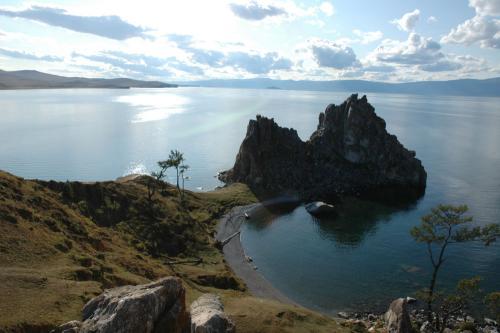
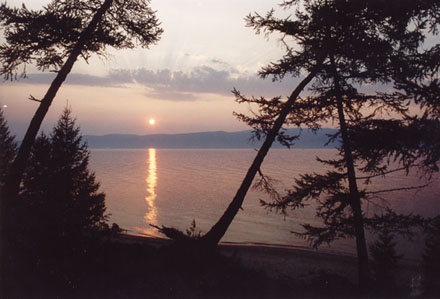
Baikal in evening
Baikal Lake in evening, Olkhon island
make a trip to Baikal Lake. The experiences you will get there will be incomparable to anything else.
In Russia we spell Lake Baikal like “Ozero Baykal”. The word “Baikal” came from Turk language. The word “bai” means “wealthy” and “kul” means “lake”. So “Baikal” originally means “wealthy lake”. It IS wealthy. The lake contains 20% of the world surface fresh water while the flora and fauna of the lake are mostly endemic.
The lake is so huge and enormous that locals call it sea. This “sea” is rapidly growing with the average speed of 2 cm (0.8 in) per year. Baikal is considered to be a future ocean; in several million years there will be a new great ocean all over Asia and Baikal is a starting point for this ocean.
This remarkable lake is a one of Asia’s holy places. Peoples through over the centuries prayed to the lake and believed in its power. You can still see at the lake the unique carvings and parts of the ritual buildings of the tribes that gone thousands years ago.
Baikal serves as a boundary for two Russian provinces – Buryatia Republic (south-east shore) and Irkutskaya oblast (north-west shore). The south-western part of Baikal is more touristic, however north-eastern part is almost deserted – few inhabitants and almost no tourists.
Baikal was added to the World Heritage list by UNESCO in 1996.


Interesting Facts:
Baikal – freshwater lake located in the southern part of eastern Siberia.
Age: around 30 mln. years old ||| Maximum depth: 1637 meters or 5370 feet (the deepest lake on the earth) ||| Area: 31500 sq. km or 12209 sq. m |||
Lengths: 636 km by 70 km ||| Islands: 26, the largest one is Olkhon island ||| Rivers feed: 336 ||| Rivers outlet: 1 (Angara river) ||| Average summer water temperature: Open water +12 C (+54 F), Bays +22 C (+72 F) ||| Warmest bays: Maloye more (Olkhon Island - western shore), Chivyrkuiskiy zaliv (Svyatoy Nos peninsula - Eastern shore), Posolsky sor.


Reasons to Travel to Baikal:
There are numerous reasons to visit the lake and experience the way of life over there. There are fresh air, tasty water
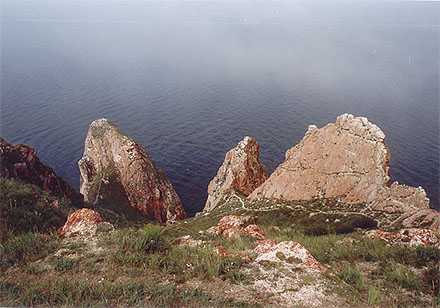
Sitting on a rock on Olkhon island, Baikal
from the lake, rocky mountains, and beautiful forests for people who want to be close to the nature. The usual tourist activities like trekking, biking, camping, kayaking, fishing occur to be unusual if it’s done at this magic lake.
You will experience another culture at Baikal, in fact two cultures – Asian Buryat and Siberian Russian. The ancient culture of Buryat people with their holy attitude to the nature, traditional shamanism and unique spiritual songs used to be the dominant at the lake for many centuries until Russian colonization in 17th century. As Russians arrived, they started to live in the Russian way with the Orthodox church, banya (sauna) and vodka but with Siberian peculiarity. Siberian Russians call themselves Siberians and are accepted like different people all over Russia. Simply said, centuries of independent life in wild nature have made them reliable, strong, traditional, and nature-respecting. These people differ from central Russians and are respected much in Russia.

Special: Baikal Fish. Fishermen have little wooden houses and come some evenings from villages for a night on the lake. It’s possible to buy fish from them; they usually sell it from home, where they prepare it for you before selling it. Weekend campers also fish, and cook their fish in all kind of ways.
For example the fresh fish can be salted (‘solyoni’), which is very tasty. It’s
Selling Baikal fish - Buryatia
made by opening the fish in the middle, emptying it from the guts and inside organs, then hammering the salt in with a big hammer.
Or fish may be dried and smoked above a fire, they are kept open with sticks in the stomach.
Another way of preparing Baikal fish is in the special soup Ukha. The soup is best prepared with water directly taken from the lake. On the beach you carefully make a fire, hang a pot over it, and boil the water. Inside you drop cut garlic, onion, carrots, potatoes, and fresh fish. It’s best to clean its skin, cut off its head and tail, and remove the red organs, then you can rinse it, cut it in pieces and drop it in the soup. Add some salt, wait not too long, and enjoy the fresh Ukha…
Also the fish can be wrapped in aluminum paper and baked in the fire.


When to Go to Baikal:
Siberian winter is a really cold winter. Meanwhile, Baikal accumulates much warmth during Summer period and influences the temperature during Winter time. The lake completely freezes in Winter and remains iced in some northern as long as until beginning of June.

Average Temperature on Baikal Lake:     
Mon: Jan Feb Mar Apr May Jun Jul Aug Sep Oct Nov Dec
Celc  -21 -18 -9 1 9 15 18 15 8 1 -10 -18
Fahr  -6 0 16 34 48 59 64 59 46 34 14 0
Average Rainfalls:      
mm 12  8 9 15 29 83 102 99 49 20 17 15
days 3 3 2 4 8 7 9 11 8 6 4 4

Most of the travelers visit the lake during Summer time. However number of tourists who wish to check what is Siberian winter and how transparent ice of the lake looks like is increasing. Most of the standard tourist activities can be done at the lake. You can go in for hiking, biking, camping, mountain climbing, fishing, etc. Meanwhile the context of the wild and untouched Baikal nature turns these activities to be something really fresh. Number of agencies provides the winter activities like skiing, dog-sledging, ice-fishing, diving. The mountains around the lake are not high enough to develop mountain skiing infrastructure. Thus, there are several small stations with T-bar lifts near Baikalsk town. Don’t forget to explore the Siberian banya – it will be useful at any time of the year.


Baikal Seasons:
Summer (15 June-15 August)
The busiest season on the lake because it is warm and there are few rains. The “hot spots” of Baikal (Maloe more on Olkhon island, Chivyrkuiskiy bay near Ust-Barguzin) are overcrowded with tourists. The bays accessible by
Olkhon island, Baikal
Night on Olkhon island, Baikal
car are transformed into the real tent towns. So, don’t hesitate to walk several kilometers out of the busy place and road and you will find the deserted beach or hidden glade.
Autumn (15 August-15 November)
End of August is usually rainy. September seems to be warm enough to travel to the lake, however the water of the lake will be already to cold to swim. Trips during October and November definitely not recommended due to the bad weather conditions.
Winter (15 November – 15 April)
From November to January Baikal is getting colder and freezes completely at the end of January. Up to February it can be really cold and snowy, there are few sunny days. March seems to be the best time if you want to explore the winter activities at the lake as there will be much sun and it will be getting warmer. You can do skiing, snow riding
Spring (15 April – 15 June)
April and the beginning of May is a bad time to go to the lake as there will be unstable weather conditions and the ground roads around the lake will be blocked with the tons of dirt. End of May and the beginning of June is a perfect time if you want to feel yourself the lonely explorer. The lake is deserted, most of the tourists are still afraid of the cool days and you can be the only traveller for hundred kilometers.


The Nature of Baikal (geology, flora, fauna):

The lake lies along tectonic break, that is the reason it is so deep (around 2000 meters (6300 ft), with quite possible 3300 meters (10000 ft) sediment under that), and so geologically active: the water gets churned up and the oxigen goes much more down than in any other lake on Earth. Hot springs are scattered along the coastline and some of them are used for medical treatment.
This place is so special and unique that there's even a special word made up by the Russian scientists for their studies: "Baikalogy"
Olkhon island
Steppes of Olkhon island, Baikal
Baikal is one of the oldest lakes on the earth, the lake is considered to be 25-30 Mln years old. The normal lake exists about 15.000 years and then disappears. However Baikal lake is growing with an average speed of 2 cm (0.8 in) a year. There is number of researches which prove that Baikal will grow some when to the new ocean.
The lake is 1637 meters (5370 feet) deep. The area of the lake is 31500 sq. km (12209 sq. mi). The lake contains 20% of the world surface fresh water.
The area of Baikal lake is a highly seismic zone with the frequent earthquakes (usually there is a big earthquake once a two years). However there are few people live near the lake, so almost nobody is being hurt or wounded.
There are mountains all around the lake, the highest range is Ulan Burgasy Range (the highest mountain is 2840 meters or 9316 feet high).
Baikal is one of the cleanest surface water reservoirs on earth and you can drink water right from the lake (well, I did). The water is cleaned by the unique micro organisms, which cleans the 50 meters deep slice of water surface three times a year.
The lake is very windy and unsteady, it is almost impossible to get in the full calm there.
The remarkable flora and fauna of the lake is unique. There were found around 2600 species and almost 70% of it are endemic and can be found in the area of Baikal only. There are bears, foxes, eagles, mosquitoes and all other typical forest inhabitants. The “stars” of the lake are nerpa and omul. Nerpa is world’s unique freshwater seal, which can be found near the Ushkanye islands (between Olkhon island and Svyatoy Nos peninsula) and in the northern parts of Baikal. Omul is Baikal’s most popular fish.


The People of Baikal:

The original inhabitants of this area were Eskimo (who live now on Alaska), in the 9th century Mongols came from the south, mixed with Eskimos and formed the Buryat people (Mongolian language group), who practiced
People at Goryachinsk thermal springs, Buryatia, Baikal lake
People at Goryachinsk Thermal Springs
traditional beliefs and Buddhism. The idea of freedom from serfdom and of free land has driven many Russians to Siberia between the 17th and the end of the 19th centuries. Baikal lake was discovered by Russians in 1643. The forts on the lake became an important link in the trade route between Russia and China.
The traditions and customs of the lake people is a mix of traditional beliefs, Buddhism and orthodox Christianity customs.
Buryats believe that there are Spirits who live near us and every mountain and river has it’s own one. Human can’t survive without the help of a spirit. So you should respest the spirits and show your respect in a way. Buyats leaves coins and cigaretts and attach cloth to the trees in the holy places. They drop coins to the road when driving in a forests. If you are drinking alcohol you should give several drops to the spirit of a place also.
If you visit Buryat house leave your luggage outside. If the host gives you a cup of something with both hands - take it with both your hands also. If the host use the right hand, take the cup with your right hand. If you meet a shaman show your respect and don’t rush to make pictures of him. Don’t touch him and his ritual clothes if you are not allowed.
There are several small wooden huts in the forests, these buildings called “zimovya” and usually built by hunters. It is normally unlocked and everyone can spend a night there. However you should leave it clean and leave some firewood, matches and salt after you.

Your Comments & Questions:
If you have something to say (or ask) and you want it to be posted on this page, please, leave your message below. We will put on this page the most interesting comments and questions.
You can also leave a message in the Trans-Siberian section of our
Talk Lounge forum.

Your message:
Post it here? Yes                No


Tours at Baikal

Explore the beauty of Baikal lake with professional adventure tour guides. Ethnographic, sightseeing, sailing, trekking, cycling, rafting tours at Baikal Lake...
Read more —
 
  Privacy Policy | Terms of Use
© 2003 Dan Perushev / WayToRussia.Net. All rights reserved.
Ask Us a Question
Feedback